
Buying guide
Bathroom Vanity Organization: A Practical Plan for Daily Essentials
Organize a bathroom vanity around plumbing, moisture, daily access, backups, and the items that should be stored elsewhere.
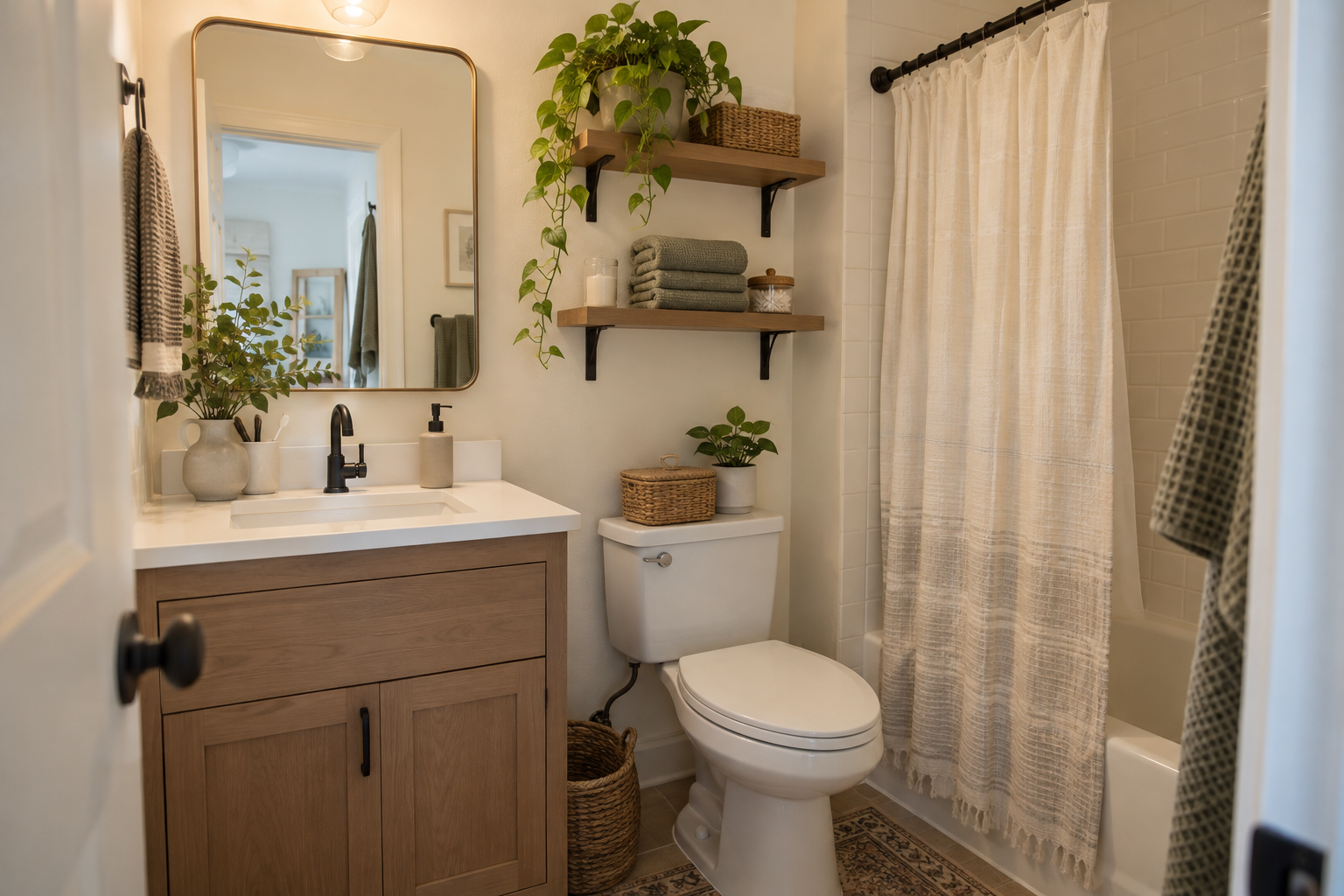
At a glance
What this guide covers
Organize a bathroom vanity around plumbing, moisture, daily access, backups, and the items that should be stored elsewhere.
A bathroom vanity works best when morning and evening essentials are reachable without mixing them with backups, cleaning supplies, and items that should stay dry. Begin with the plumbing and actual routine rather than a matching organizer set.
Empty and inspect the vanity
Remove everything, clean the cabinet and drawers, and look for moisture, swelling, leaks, or damaged finishes. Organization should not conceal a maintenance problem. Keep valves and plumbing accessible.
Sort by frequency and storage conditions
Create daily, occasional, backup, and relocate groups. Follow product labels for storage conditions. Medicines and items sensitive to bathroom heat or humidity may need another location.
Measure around pipes and drawer movement
Record usable width, depth, and height on both sides of the plumbing. Include hinges, traps, valves, drawer boxes, handles, and the path needed to remove a bin.
Limit the countertop
Keep only daily items that tolerate the environment. A divided holder such as SK-BAT-006 may group toothbrushes and related items if its current dimensions fit. Clean the holder regularly and avoid crowding items that need to dry.
Use drawer dividers for small categories
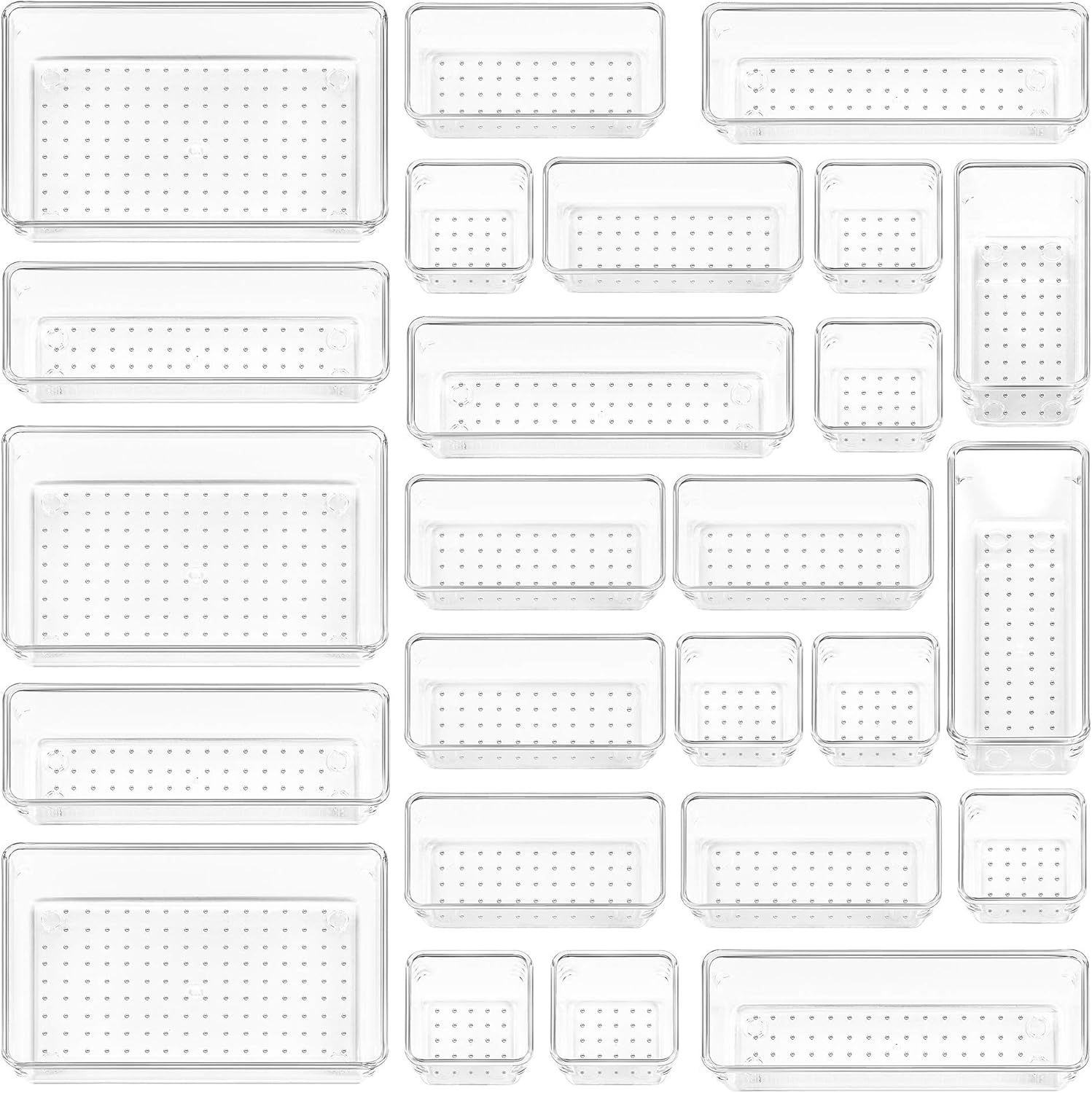
The Vtopmart multi-size tray set, SK-KIT-001, is an optional example for separating small items. Arrange categories according to the drawer dimensions rather than forcing every tray into one space. Confirm the current pieces and measurements.
Create an under-sink daily zone
Place frequently used, appropriately stored supplies near the front. Backups can sit farther back in one removable bin. Leave plumbing visible and avoid stacking products where labels cannot be read.
Keep cleaning supplies distinct
Follow every label and household safety requirement. Do not combine chemicals or transfer them to unlabelled containers. If children or pets can access the vanity, choose a safer storage location or appropriate safeguards.
Run a one-week test
Use the arrangement for seven days before buying more components. Notice which objects remain on the counter, which drawers require two hands, and which backups are forgotten. Adjust the zone rather than adding another container automatically.
Map the morning and evening routines
List the items used every morning, every evening, weekly, and only occasionally. Give the daily group the easiest drawer or front cabinet zone. Products used together can share one boundary when their labels permit the same storage conditions; unrelated backups should not occupy that access.
Notice where items are first placed down and where they are returned. If a product repeatedly remains on the counter, its assigned home may be too far away, too full, or too complicated to open. Fix the access step before buying another organizer.
Inspect moisture and plumbing first
Empty the cabinet and drawers, then inspect the base, walls, pipe connections, and surrounding finishes. Look for moisture, staining, swelling, odor, corrosion, or damaged surfaces. Organization should never conceal an unresolved maintenance condition.
Keep valves, traps, hoses, and connections visible and reachable. A removable tray may make small drips easier to notice and clean, but it is not a repair. Address active leaks or persistent moisture before stored items return.
Measure usable space on both sides
Record cabinet width, depth, and height at the front and back. Mark pipes, hinges, drawer boxes, center stiles, shelves, door-mounted hardware, and the hand space needed to remove a bin. The usable zones on the left and right may be completely different.
Measure drawers inside, including curved sides, handles, stops, and the full opening path. A tray that matches the listed drawer width may still fail if the interior narrows or the drawer does not extend fully.
Keep the countertop as a working surface
Limit the counter to products used daily and suitable for the bathroom environment. A holder such as SK-BAT-006 may group toothbrushes and related items when its verified dimensions, materials, and care guidance fit the routine. Allow items that need to dry to do so appropriately.
A tray can define a small group, but it should not become the boundary for every product in the room. Leave enough open surface to wipe around the sink and use the faucet comfortably. Store electrical items according to their instructions and away from unsuitable moisture exposure.
Use drawer trays only where categories mix
A multi-size tray set such as SK-KIT-001 may separate small grooming items inside a compatible drawer. Confirm the current pieces and dimensions, then choose only the trays that support the actual categories. Forcing every tray into one drawer can create compartments too small to use.
Place the most frequent items at the front and keep labels or distinguishing features visible. Avoid transferring products into unlabelled containers. A drawer should open, reveal the needed category, and close without rearranging several objects.
Create a daily under-sink zone
Use the cabinet front for appropriately stored daily supplies. A shallow removable bin can group one routine while preserving visibility behind it. Check the tallest bottle, the lowest pipe, the door opening, and the space needed to lift the bin without touching plumbing.
Keep reserve products farther back only when they remain visible and easy to remove. Do not fill every gap around the trap. Open service space helps reveal leaks and makes maintenance less disruptive.
Separate backups from active products
Choose one clear boundary for unopened backups and set a practical limit. Check that group before shopping so duplicates do not spread into the daily drawers and countertop. Use older suitable products first according to their labels and condition.
Do not combine partly used products merely to save space unless the manufacturer permits it. Keep original labels, instructions, and closures. Dispose of unwanted or expired products according to applicable guidance.
Store cleaning products according to their labels
Keep household chemicals in original labelled containers and follow all storage, ventilation, temperature, and separation instructions. Never mix products or transfer them into food or drink containers. A visually tidy cabinet is not useful if incompatible products are stored together.
Where children or pets may access the vanity, use an appropriate safer location or safeguards consistent with current guidance. Child-resistant packaging is not a substitute for suitable restricted access.
Move unsuitable categories elsewhere
Medicines, temperature-sensitive products, documents, food, and items that should remain dry may need another location. Follow product labels and professional guidance rather than assuming every personal-care item belongs in the bathroom.
Relocating one category can be more effective than adding shelves. The vanity should support washing, grooming, and the bathroom’s actual routines, not serve as general household overflow.
Make shared storage understandable
Give each person a defined daily boundary and keep genuinely shared items in a separate zone. Divide space according to real routines and access needs rather than forcing identical areas. Labels can help, but the physical location should make ownership clear.
Agree on where replacements, travel products, and items awaiting a decision belong. When that boundary fills, review it together before expanding into another person’s space or onto the counter.
Plan for cleaning and maintenance
Choose trays and bins that can be removed independently and cleaned according to their care guidance. Leave access to wipe drawer interiors, cabinet walls, the floor, and the area around plumbing. Avoid liners that trap moisture against damaged surfaces.
Once a week, clear the countertop, wipe holders, return misplaced items, and check the cabinet base. Once a month, remove the front bins and inspect the plumbing area without manipulating connections. Stop and address any moisture or damage.
Evaluate organizer products carefully
The optional product examples above are not presented as hands-on tested. SpaceKindly matches their approved Product IDs and stated formats to specific vanity problems. Price, ratings, review counts, sales claims, and availability can change and are not treated as fixed evidence.
Before purchasing, verify the current identity, dimensions, materials, included parts, assembly or installation, load, care, return terms, and merchant offer. If the current listing no longer matches the approved record, pause the recommendation until it is reviewed.
Questions to answer before buying organizers
- Which products are used daily, weekly, occasionally, or only as backups?
- What are the usable drawer and cabinet dimensions after plumbing and hinges?
- Can each tray or bin be removed without touching pipes or moving unrelated items?
- Are all stored products suitable for bathroom heat, humidity, and access?
- Will leaks, valves, labels, and the cabinet base remain visible?
- Does each proposed organizer solve a problem that remains after the one-week test?
Weekly reset
- Wipe the counter and holders.
- Return misplaced daily items.
- Check for moisture beneath the sink.
- Remove empty packaging.
- Move excess backups out of the daily zone.
After the reset, confirm the sink, faucet, drawers, doors, outlets, and walking route remain easy to use. If a container repeatedly sits outside its assigned place, reduce its contents or change the location instead of adding another layer of storage.
Photograph the working arrangement so it can be restored after cleaning or plumbing access. The useful result is a repeatable routine, not a permanently styled cabinet.
Review the arrangement again when products, plumbing, or household access needs change. Measurements and storage rules that worked previously may no longer fit a new bottle size, drawer use, or maintenance requirement.
Visit the Small Bathroom hub, explore organization solutions, review storage planning, compare small-space solutions, or browse more practical projects in Ideas.
Approved recommendations
Product Picks and Comparison


| Product | Best for | Offer status |
|---|---|---|
| Bathroom Counter Organizer and Storage | See editorial notes | Active merchant offer |
| Vtopmart 25 PCS Clear Plastic Drawer Organizers Set | See editorial notes | Active merchant offer |
| EUDELE Adhesive Shower Caddy | See editorial notes | Active merchant offer |
Our process
How We Choose Products
We evaluate whether a product addresses the stated small-space problem, review available specifications and merchant information, and prioritize practical fit. We clearly distinguish research and editorial selection from hands-on testing.
 How-To GuideUnder-Sink Kitchen Storage: A Practical Step-by-Step Plan
 Buying GuideBest Shower Caddies for Small Bathrooms