
Buying guide
Best Small-Space Storage Ideas: Five Formats for Different Problems
Compare cubes, narrow carts, shoe cabinets, and hidden-storage furniture by the exact problem and measurements of a smaller home.

At a glance
What this guide covers
Compare cubes, narrow carts, shoe cabinets, and hidden-storage furniture by the exact problem and measurements of a smaller home.
The best small-space storage is not the option with the highest stated capacity. It is the format that fits the available footprint, keeps a specific category accessible, and does not obstruct doors, walkways, outlets, or everyday movement.
Affiliate disclosure: SpaceKindly may earn a commission from qualifying purchases at no extra cost to you. The products below come from the approved library and are evaluated by use case, not presented as hands-on tested.
Choose by problem
- Loose shelf categories: Amazon Basics fabric cubes, SK-APT-001.
- A modular wall or closet zone: AWTATOS 12-cube organizer, SK-APT-002.
- Shoes in a shallow footprint: BORNOON flip-drawer shoe cabinet, SK-APT-003.
- A very narrow gap: four-tier slim rolling cart, SK-APT-004.
- Living-room items that need concealment: VASAGLE lift-top coffee table, SK-APT-005.
Fabric cubes for flexible categories
SK-APT-001 is a six-pack of 13-inch fabric cubes with handles. Cubes may suit folded textiles, toys, or household categories already assigned to compatible shelving.
Trade-off: Soft bins hide their contents and depend on a shelf or stable stacking arrangement. Confirm the shelf opening, loaded handling, and current care instructions.
A cube organizer for a defined storage wall
SK-APT-002 is listed as a 12-cube organizer. Separate openings can keep categories distinct and may combine open display with bins.
Trade-off: A larger unit uses meaningful wall and floor area. Verify dimensions, assembly, stability, anchoring guidance, and whether twelve compartments are genuinely needed.
A flip-drawer cabinet for shoes
SK-APT-003 is a freestanding cabinet with three flip drawers and a product-title depth of 9.45 inches. The shallow format may suit an entry area where open racks look busy.
Trade-off: Footwear size, drawer geometry, baseboards, and door clearance affect fit. Confirm all current measurements and stability instructions.
A rolling cart for a narrow gap
SK-APT-004 is listed as a four-tier slim mobile cart. It may suit a narrow kitchen, bathroom, laundry, or office gap when the cart can roll out completely.
Trade-off: Narrow mobile units should remain stable and lightly loaded. Measure the gap at floor and handle height, and check wheels, shelf clearance, and intended load.
A lift-top table for concealed living-room storage
SK-APT-005 combines a coffee-table surface with hidden storage and a gas-spring lift top. It may consolidate a table, occasional work surface, and storage for small living-room items.
Trade-off: Moving parts need open clearance and safe operation. Verify current dimensions, assembly, mechanism instructions, and the space needed when the top is raised.
Start with the category and the access pattern
Before comparing products, name the belongings that need a home and how often they are handled. Daily shoes need faster access than seasonal textiles. Work supplies may need to move between rooms, while living-room remotes and chargers benefit from a fixed nearby boundary. One storage format rarely solves all four routines equally well.
Count the category after removing broken, duplicated, or misplaced items. Measure the largest object and estimate a normal amount of overflow. A product should offer a little usable margin without becoming an invitation to collect unrelated items.
Measure usable space, not an empty gap
Record floor width, depth, height, baseboards, trim, outlets, vents, door movement, and the route used to reach or open the product. For drawers and lift tops, include the complete operating path. For rolling carts, measure at floor, shelf, and handle height because walls and furniture may not remain parallel.
Mark the proposed footprint with painter’s tape or a cardboard outline. Walk through the room, open adjacent furniture, and perform the activity the product is meant to support. A storage piece that fits only when the room is still is not a reliable fit.
When fabric cubes are the better choice
Fabric cubes such as SK-APT-001 can group lightweight categories inside a compatible shelf. Their handles can make a deep compartment easier to use, and the opaque surface can reduce visual clutter. Confirm the current exterior dimensions, shelf opening, material, care guidance, and comfortable loaded weight.
They are less suitable for wet items, sharp objects, heavy supplies, or categories that are forgotten when hidden. Use specific labels and keep each cube to one purpose. Do not stack soft cubes unless the current product guidance and surrounding structure support that use.
When a cube organizer earns its footprint
A modular unit such as SK-APT-002 may suit a wall that needs several stable category boundaries. It can combine open books or display items with contained storage. Before choosing twelve openings, calculate how many categories genuinely need separate access and whether a smaller unit would preserve more floor and wall space.
Follow the current assembly, orientation, load, and anchoring instructions. Place heavier objects lower when permitted and keep access for cleaning. A tall unit used as a room divider may have different stability needs; do not copy an unsupported orientation from a staged image.
Evaluate shallow shoe cabinets with real footwear
The approved title for SK-APT-003 identifies three flip drawers and a shallow stated depth. That format may reduce visual clutter in an entry, but drawer geometry determines which shoes fit. Measure the longest, widest, and tallest current-season pair, including thick soles and ankle openings.
Check the loaded drawer path, baseboards, door swing, and anchoring guidance. A narrow cabinet can become unstable when drawers open or footwear shifts. Keep the entry route clear and avoid assuming the manufacturer’s pair count applies to every shoe size and style.
Use a slim cart for one mobile routine
A four-tier cart such as SK-APT-004 may help where supplies need to move between a storage gap and a work area. Assign it to one routine—perhaps art materials, laundry supplies, pantry overflow, or office equipment—so every shelf has a clear return pattern.
Check floor transitions, rugs, door thresholds, and stability when loaded. Keep heavier items low if allowed and liquids upright. The cart should roll out completely without pulling cords, striking furniture, or entering a main walkway. Confirm current caster, shelf, load, and care information.
Decide whether concealed furniture storage helps
A lift-top table such as SK-APT-005 may reduce the number of separate living-room pieces by combining a surface and concealed compartment. It works best for a limited category used near the seating area. Measure the closed footprint, raised top, seating distance, and circulation around the complete mechanism.
Hidden storage can also conceal duplicates and make cleaning harder when overfilled. Choose a defined purpose, keep frequently used items near the opening, and follow current assembly, load, and moving-part safety instructions. Do not assume the raised surface is suitable for activities or weights the manufacturer does not identify.
Compare open, opaque, and concealed access
Open storage keeps inventory visible and can make daily return faster, but mixed categories create visual noise. Opaque bins calm the view but require labels. Furniture with concealed storage preserves the room’s appearance while adding an opening step. Choose the lowest-friction format for the actual routine.
If forgotten duplicates are common, use more visibility before buying capacity. If visible small objects make the room difficult to reset, one contained category may help. The decision is behavioral as well as spatial.
Account for cleaning and maintenance
Storage should not block vents, outlets, radiators, windows, plumbing access, or required routes. Leave enough space to clean beneath and behind the product. Rolling and removable formats need a dependable parking position; stationary furniture should not seal off an area that requires inspection.
Periodically check fasteners, wheels, fabric, finishes, anchors, and moving mechanisms according to product guidance. Stop using a product that becomes unstable or damaged. Open capacity around a storage piece is useful when it supports safe movement and maintenance.
Consider renters and changing rooms
Freestanding and removable products may adapt more easily when a lease changes, but they still require appropriate stability and surface protection. Adhesive or wall-secured components can affect finishes and may require permission. Review the lease and current installation instructions.
Choose formats that can serve another measured category when the household changes. Fabric cubes and carts may be easier to reassign than a highly specific cabinet, while multi-use furniture demands more permanent floor area. Adaptability is valuable only when the product still performs its main job well.
How SpaceKindly evaluates these products
We match each approved Product ID to a distinct storage problem, then compare footprint, access, visibility, installation, maintenance, and household constraints. Price, star ratings, review counts, sales rank, and availability can change and are not treated as permanent proof of suitability.
These items are not presented as hands-on tested. Before purchasing, verify the current product identity, dimensions, materials, included parts, assembly, load, stability, anchoring, care, return terms, and merchant offer. Pause the recommendation if the current listing no longer matches the approved record.
Questions to answer before purchasing
- Which exact category and repeated problem will the product solve?
- What is the complete usable footprint and opening path?
- Will the category remain visible enough and easy to return?
- Does the format preserve walking, cleaning, and maintenance access?
- Can installation follow current guidance and any rental restrictions?
- Have the listing, dimensions, components, and instructions been rechecked?
Who should skip these products
Skip furniture when the room needs open floor area more than capacity. Skip opaque storage when forgotten duplicates are the main problem. If the intended category has no defined limit, edit the contents before purchasing another container.
Final comparison checklist
- Name one problem the product must solve.
- Measure the footprint and every opening path.
- Check stability, assembly, and anchoring guidance.
- Confirm the category fits without forced packing.
- Review the current merchant listing and included parts.
For planning before shopping, use the Apartment hub, compare storage solutions, review organization guidance, explore small-space solutions, or browse approved products in the Shop.
Approved recommendations
Product Picks and Comparison

Amazon Basics Collapsible Fabric Storage Cube Bins Organizer with Handles for Organization and
Amazon Basics
View at Amazon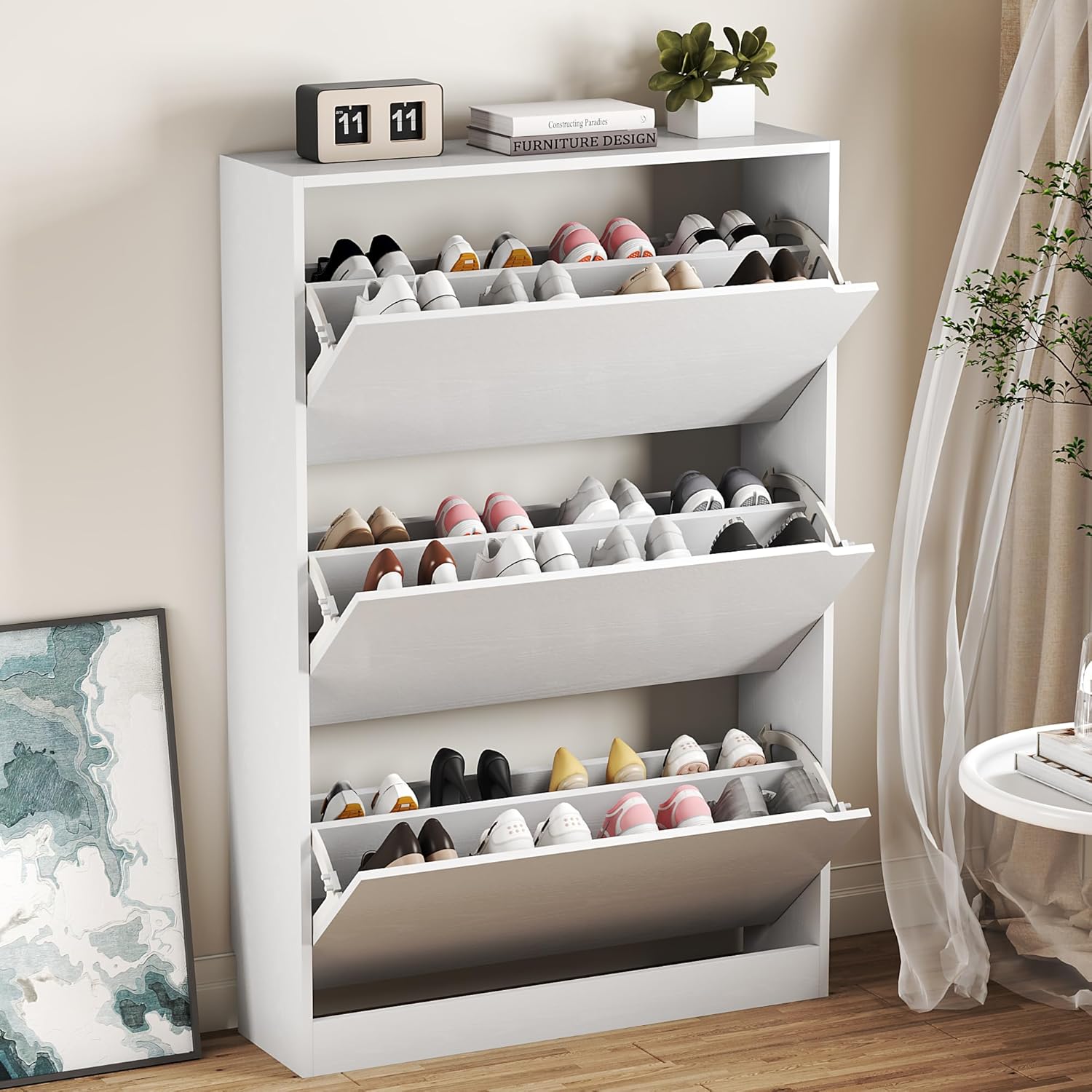

| Product | Best for | Offer status |
|---|---|---|
| Amazon Basics Collapsible Fabric Storage Cube Bins Organizer with Handles for Organization and | See editorial notes | Active merchant offer |
| BORNOON Shoe Cabinet with 3 Flip Drawers | See editorial notes | Active merchant offer |
| AWTATOS 12 Cube Storage Organizer | See editorial notes | Active merchant offer |
Our process
How We Choose Products
We evaluate whether a product addresses the stated small-space problem, review available specifications and merchant information, and prioritize practical fit. We clearly distinguish research and editorial selection from hands-on testing.
 How-To GuideUnder-Sink Kitchen Storage: A Practical Step-by-Step Plan
 Buying GuideBest Shower Caddies for Small Bathrooms